
Panel Upgrades in Austin
For a fuse box, a full or outdated breaker panel, or a house that is adding air conditioning, an EV charger or a new kitchen.
The service panel is where every circuit in the house starts. Many Austin homes built before the 1980s still run on a 60 or 100 amp service sized for a smaller house with fewer appliances. Since then, most have picked up central air, an electric dryer, a second refrigerator, a hot tub or an electric car. In July and August the air conditioner runs for hours on end, and that long, heavy load is when an undersized or worn panel shows it: breakers trip, lights dim, and the panel cover feels warm.
An upgrade can mean replacing the panel with one of the same size, or raising the service, for example from 100 to 200 amps, which also involves the meter base, the service wires and the utility. Which one a house needs depends on what it carries now and what you plan to add.
Signs You May Need an Upgrade
- Breakers that trip under ordinary use, especially with the AC running
- A buzzing sound or a warm cover on the panel
- A fuse box instead of breakers
- No space left for a new breaker, or several circuits sharing one
- Rust, water stains or moisture inside the panel
- Scorch marks or a melted look on a breaker or a wire
Common Panel Situations
Swipe left to see the rest of the table.
| Panel situation | What it can mean | Usual next step |
|---|---|---|
| Fuse box | An older service, often 60 amps, with fuses that can be swapped for the wrong size | Replace with a breaker panel, usually with a larger service |
| 60 or 100 amp service | Little room for central air, an EV charger or an electric range on top of the rest | Load calculation, then a service upgrade if the numbers call for it |
| Federal Pacific or Zinsco panel | Brands with a history of breakers that may not trip when they should | Plan a replacement rather than adding to the panel |
| Double-tapped breakers | Two wires under a breaker made for one: loose connections and heat | Separate the circuits, add tandem breakers where allowed, or add space |
| Full panel, no spare slots | New circuits have nowhere to land | A larger panel, or a subpanel when the service itself is big enough |
What Shapes the Work on Your Panel
Tick what applies to your house. The notes explain how each factor changes the scope of the job. No prices: every panel job is priced after a look at the house.
Tick the factors that apply, then press the button to see how each one changes the job.
What the Visit Looks At
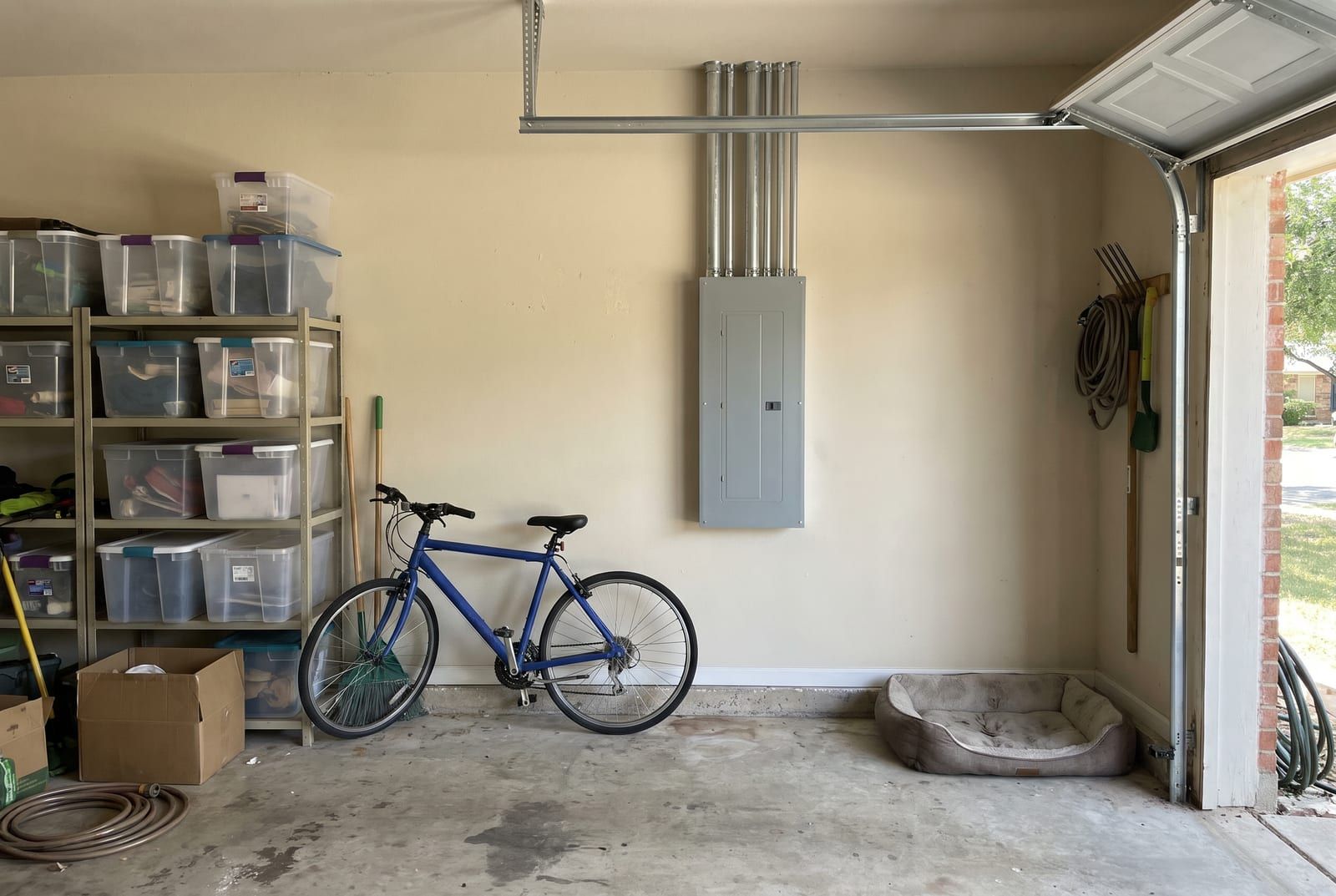
A panel job starts with the panel open: the brand and its condition, how many circuits share space, what size wire feeds each breaker, and how the panel is grounded and bonded. Outside, the meter base and the service mast are checked for rust, a loose weatherhead or a mast pulled away from the wall. Before any work is called finished, every breaker’s size is matched to its wire, the connections in the panel are retightened, and each circuit label is checked against what it actually feeds, so the next electrician can read the panel without guessing.
Questions About Panel Upgrades
How long is the power off during a panel change?
For a straightforward swap in the same spot, most of a working day is typical. The house is without power from the moment the utility disconnects the service until the new panel is inspected or released and the meter goes back in. Moving the panel, replacing the meter base or finding damaged wiring can stretch that, so plan for food, medical equipment and anyone working from home.
Does a panel upgrade need a permit and an inspection?
In the City of Austin and the surrounding cities, a panel or service change is permitted work, and an inspector checks it before the utility restores permanent power. The permit office depends on where the house sits: city limits, a neighboring city, or unincorporated county land. The What to Expect page lays out how permits and inspections usually run.
What does the utility do, and what does the electrician do?
The utility owns the meter and the lines up to it. It disconnects and reconnects the service and, for a larger service, may change the drop or the meter. The electrician handles everything on the house side: the meter base and service mast when they need work, the panel, the breakers, grounding and bonding, and the circuits that land in the panel.